The case study
Context
The Church of Pentecost is a global church with more than 5.2 million members (5,226,271, the Church’s current official figure).
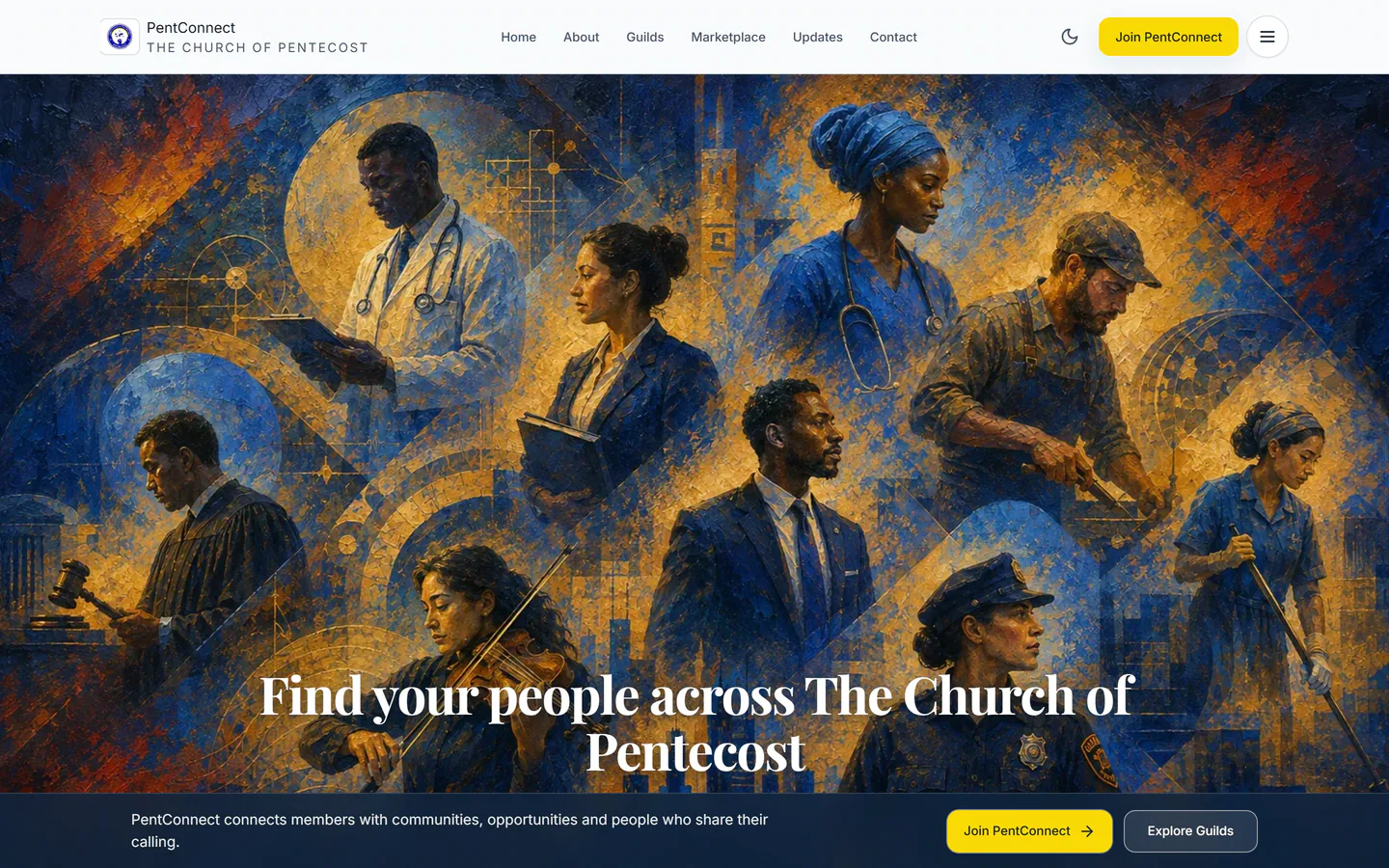
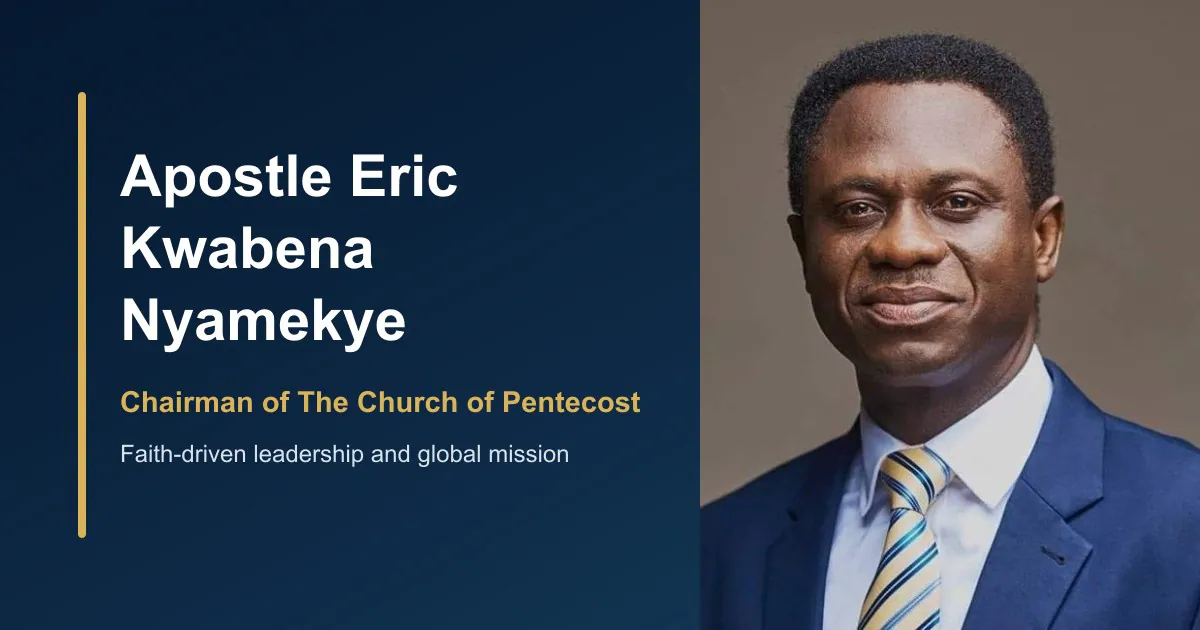
Its global website is where members, visitors, the diaspora, journalists and partners meet the institution: its story and beliefs, its leadership, its ministries and sectors, its news and its presence across the nations.
The challenge
Re-platforming a large, long-lived public website means carrying everything that already works while fixing what does not:
- A very large content footprint — nations, areas, ministries, sectors, leadership, history, news and media — that has to stay navigable.
- An audience that reads in several languages, including Ghanaian languages.
- Existing links and search rankings that must not break when the platform changes underneath them.
- An editorial team that needs to publish safely: drafts, approvals, scheduling and an audit trail.
What we built
A public platform and the CMS behind it:
- Server-rendered pages with metadata, canonical URLs, Open Graph and structured data — the organisation, site search, events, people, news articles and FAQs.
- A sitemap with images, answer-engine files (llms.txt) and 55 redirect rules that carry legacy URLs forward.
- Seven languages — English, French, Portuguese, Spanish, German, Twi and Ga — with an administrative translation centre.
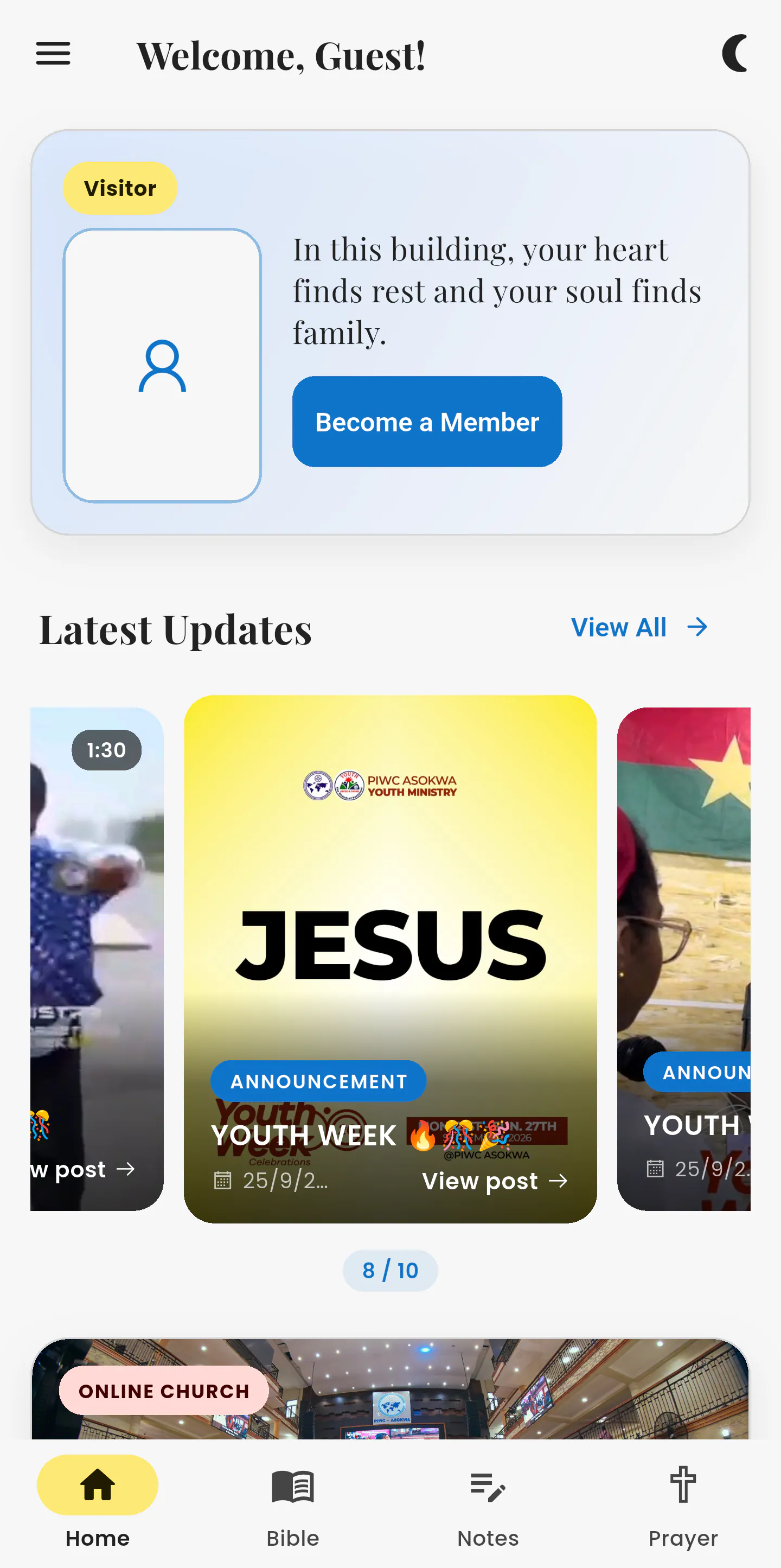
- A newsroom that syncs from the Church’s official news source every 15 minutes while protecting local edits.
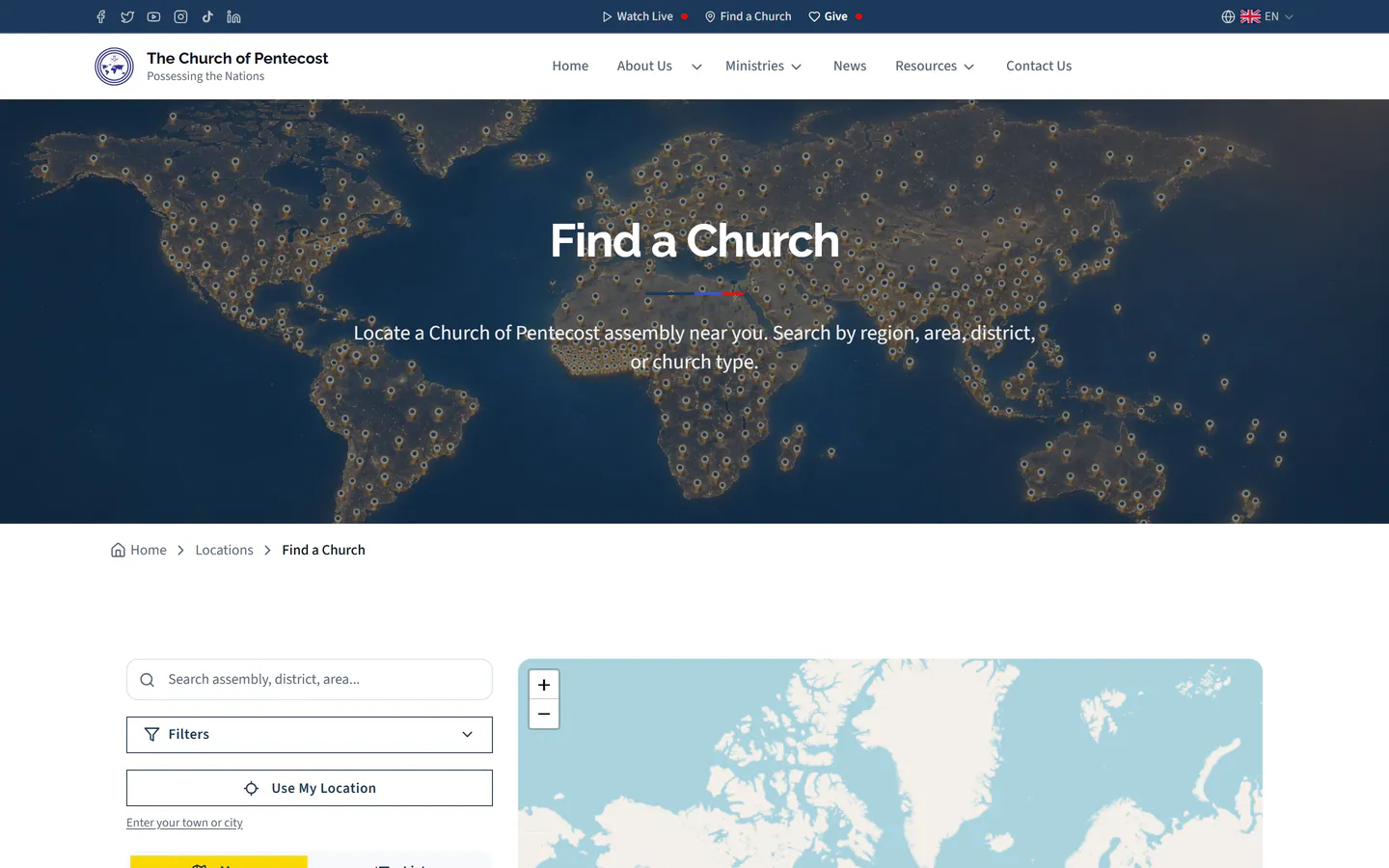
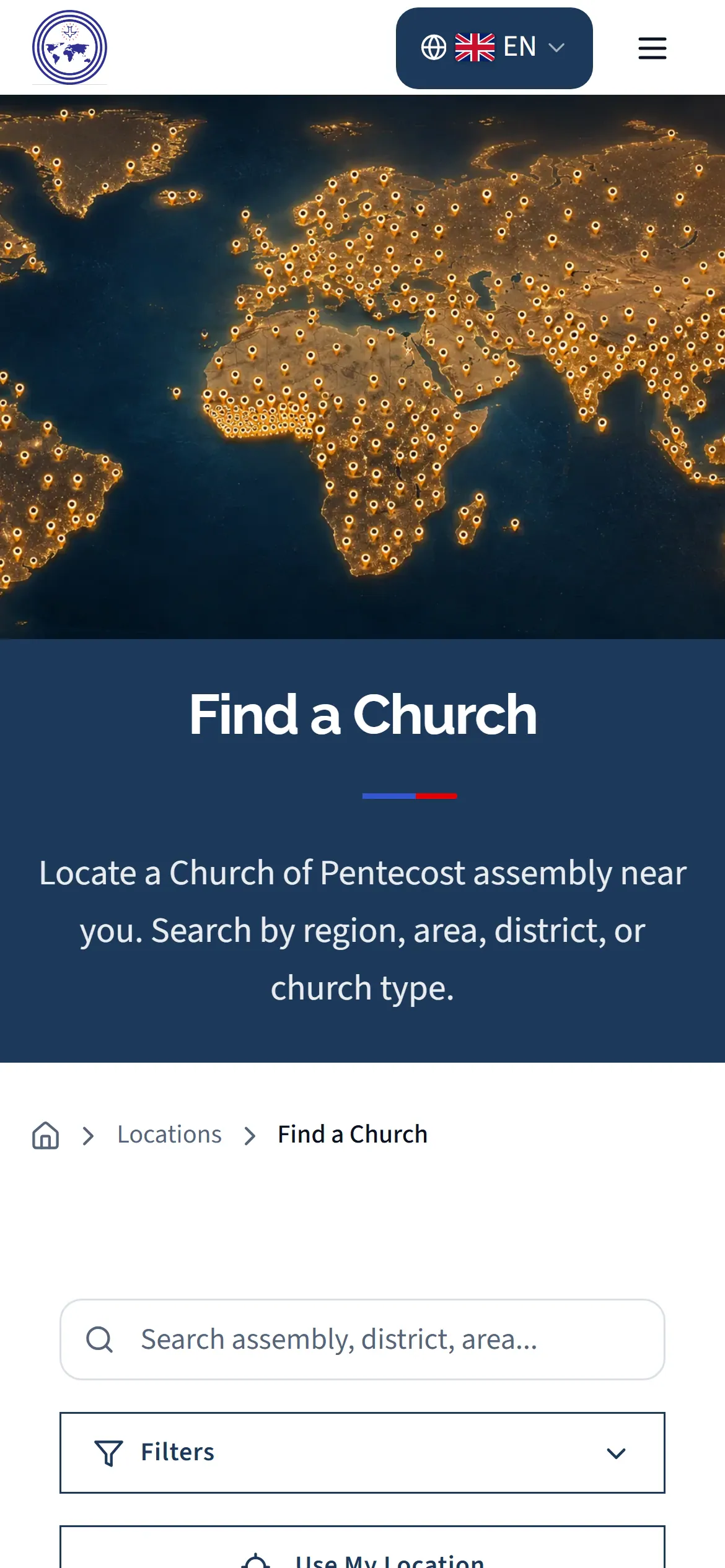
- Global presence: Find a Church, nation pages and area maps with clustering.
- Sections for the Church’s sectors — PENTSOS, Pentecost Hospital, Pentecost University, the Convention Centre and Pentecost Press — Vision 2028, missions, the events calendar and site search.
- An editorial CMS: news and articles, sermons, an approval queue and publishing audit, hero and homepage ordering, countries and areas, a media library with galleries and videos, prayer requests, newsletter subscribers and redirects.
- Roles for super administrators, editors, approvers, contributors and viewers, with scheduled publishing, previews and RSS.
Engineering scope
A Next.js 16 application with a Supabase back end — 264 database migrations and 28 edge functions for publishing, previews, feeds and newsroom sync. The route inventory covers 89 public route patterns.
Quality tooling runs alongside it: an image pipeline and audits, contrast and palette checks, Lighthouse scripts, asset budgets, 117 unit test files and 41 Playwright specifications.
Design decisions
- Server-rendered first, so every page carries its own metadata and structured data for search and AI answer engines.
- Redirects as a first-class feature, so the move does not cost the Church its existing links.
- Ghanaian languages alongside international ones, not as an afterthought.
- Publishing with guard rails: approvals, scheduling and an audit trail for every change.
The delivered system
A complete public platform and editorial CMS, built and deployed on the platform’s own infrastructure. The move to the Church’s official domain is managed by the Church.